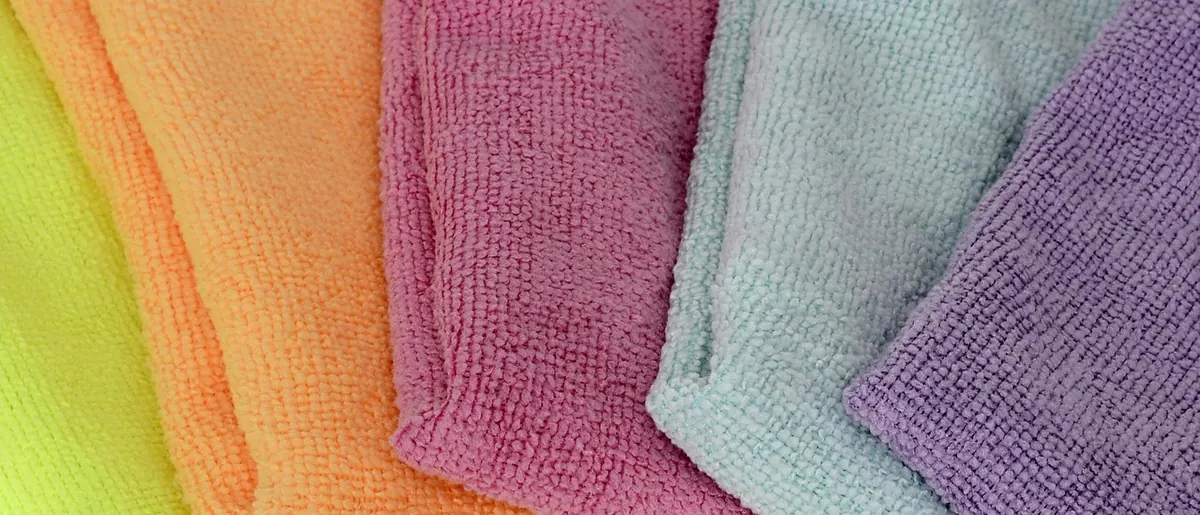
Reach for the wrong cloth and a two-minute job turns into ten minutes of chasing streaks around a window. Most homes have both kinds somewhere: a stack of fluffy cotton towels in a cupboard and a few soft, slightly grippy squares that came with a mop or a pack of cleaning supplies. They look interchangeable. They are not, and the difference matters most on the surfaces where you notice mistakes — glass, stainless steel, glossy paint, dark wood.
Here is how microfiber and cotton actually compare, job by job, so you can stop guessing and just grab the right one.
The short answer, if you are mid-clean
- Glass, mirrors, windows, screens: microfiber, always.
- Dusting shelves, blinds, electronics, baseboards: microfiber, dry or barely damp.
- Polishing stainless steel and chrome: microfiber.
- Sopping up a big spill of water, milk or juice: cotton.
- Wiping grease from a hob or splashback: microfiber for the final wipe, cotton for the heavy lifting.
- Scrubbing dried-on food, grout or bath scum: cotton terry, or a microfiber cloth with a textured scrubbing side.
- Muddy boots, garden tools, paint splatters: cotton. Never the good microfiber.
Why the two cloths behave so differently
Microfiber is a synthetic fabric, usually a blend of polyester and polyamide, woven from filaments far finer than a human hair. Those fine filaments are split into wedge shapes, which is why the cloth feels slightly grabby against your skin. Dirt and oil cling to the edges of the fibres rather than soaking into them, and the tight weave means the cloth leaves almost nothing behind as it passes over a surface.
Cotton is a natural fibre that absorbs liquid into the fibre itself. It swells, gets heavy, and holds a serious amount of water. A cotton terry towel is thirsty in bulk, forgiving of abuse, and can be boiled or bleached without falling apart. It also sheds lint, which is exactly what you do not want on a bathroom mirror.
Absorbency: cotton drinks, microfiber grabs
For volume, cotton wins. A thick cotton towel will take up more water in one pass than a microfiber cloth of the same size, and it wrings out easily, so you can keep using one towel through a whole spill. That is why a cotton bath towel is the right tool for a leaking washing machine or a toddler's overturned cup.
Microfiber is better at picking up what sits on a surface, especially oil and grease. A microfiber cloth wiped across a greasy splashback lifts the film instead of smearing it around, and it does the same with fingerprints on a stainless steel fridge. Its weakness is saturation: once it is properly wet, it stops picking things up and starts pushing them around. Wring it out often.
Streaks and lint: the glass test
Wipe a mirror with a damp cotton cloth and you will see two problems: lint fibres catching the light and a haze that reappears as the glass dries. Wipe the same mirror with a clean microfiber cloth and plain water and you will usually get a clear finish with no product at all.
The trick is to use two cloths rather than one. Dampen the first with water, wipe the glass to lift the grime, then follow immediately with a dry microfiber cloth to buff away the last of the moisture. Work top to bottom, and turn the cloth to a dry section as you go. If a window is heavily soiled, a drop of washing-up liquid in the water helps — just finish with a clean, plain-water wipe so no residue is left behind.
Scrubbing power and surface safety
Cotton terry has loops, and loops are abrasive. That makes it the better choice for baked-on oven trays, grouting, and the ring around a bathtub, where you need friction more than absorbency. Woven cotton (the flat, flour-sack type) is gentler and works well for drying glassware and polishing.
Plain microfiber is a poor scrubber. It glides over dried ketchup or hardened toothpaste. Textured microfiber — the kind with a ribbed, waffle or scrubby side — splits the difference and is a sensible pick for kitchens and bathrooms where you want one cloth to do most things.
Two warnings worth remembering. Grit trapped in any cloth will scratch, so shake cotton towels out outdoors after floor or garden work instead of rinsing them in the sink where they are headed next. And keep floor cloths and counter cloths separate; colour-coding them is the simplest way to keep that habit.
Best uses, by job
Glass and mirrors
Microfiber, two-cloth method, plain water. Avoid paper towels on tinted or coated glass, and never use a cloth that has touched furniture polish or oil; it will smear for weeks.
Dust
Dry microfiber works because static and the fine fibres hold dust instead of flicking it into the air. Fold the cloth into quarters and turn it as each side loads up. On delicate surfaces — screens, framed photos, lampshades — use a barely damp microfiber to avoid scratching. Cotton is fine for a quick pass on skirting boards and window frames, but it tends to push dust into corners rather than lift it.
Spills
Cotton first to take up the bulk, then microfiber to remove the residue and dry the surface. That order saves you from wringing a soaking microfiber cloth ten times and still leaving a sticky film. For greasy spills, skip ahead to microfiber with a little washing-up liquid.
Looking after both so they keep working
Microfiber loses its grab when it is clogged or coated. Wash it in warm water with a mild detergent, keep it away from fabric softener and dryer sheets (they coat the fibres), and either air dry it or use a low heat setting. Wash microfiber separately from cotton and other lint-shedding fabrics, because once lint works its way into the weave it is hard to remove. Retire a cloth when it feels slick and no longer grips a clean window.
Cotton is more forgiving. Hot water, a normal detergent, and a hot dryer are all fine, and white cotton towels can be washed with bleach when they get grimy. Expect them to thin and fray over time; a frayed cotton towel makes a perfectly good rag for the garage.
The habit worth building
Keep a small stack of each within reach, and let the surface tell you which to use. If the goal is a clear, smear-free finish — glass, chrome, screens, granite, dark wood — reach for microfiber, and keep one dry cloth aside for buffing. If the goal is to move a lot of liquid or apply real friction — a spill, a scrubbing job, a muddy floor — reach for cotton and wring it out without guilt.
Buy a handful of each in different colours, assign those colours to jobs, and the question of which cloth goes where answers itself. Your windows, your worktops and your patience will all be better for it.
Photo: anncapictures / Pixabay