Some boxes are easy. The tangled extension cords, the mismatched lids, the drawer of dead pens — out they go. Then you open the shoebox of letters from your grandmother, and the whole project stops dead.
Sentimental clutter is hard because it isn't really about the objects. It's about the people, the years, the version of you who lived them. That's why the usual advice — be ruthless, toss anything that doesn't spark joy — falls flat here. You can let go of sentimental items without regret, but it takes a different approach: slower, kinder, and built around decisions you can actually live with.
Give Yourself Permission to Take Your Time
Most decluttering advice assumes momentum. Sentimental items need the opposite. Set a timer for 30 minutes and stop when it rings, even if you're on a roll — leaving a task deliberately half-finished makes it easier to come back to. Try not to sort when you're exhausted, sick or already emotional. On those days you'll either keep everything or toss something you'll miss.
One rule keeps this work honest: nothing has to leave today. The goal isn't an empty shelf. It's a collection small enough that you can find what matters, see it, and use it. Forty photos you actually look at beat four thousand in a closet.
Start Where the Feeling Is Weakest
Sentimental clutter isn't one pile. It's at least five, and they carry very different weights. Sorting them easiest-first means you build the decision-making muscle before you need it most:
- Photos from trips, parties and ordinary days
- Cards, letters and journals
- Gifts you've been given
- Your own childhood keepsakes
- Heirlooms and belongings of people who have died
Do the top of that list first. By the time you reach the hardest category, you'll have made hundreds of small calls and learned what your own threshold for "keep" feels like.
The Photo Problem
Work in batches, not shoeboxes
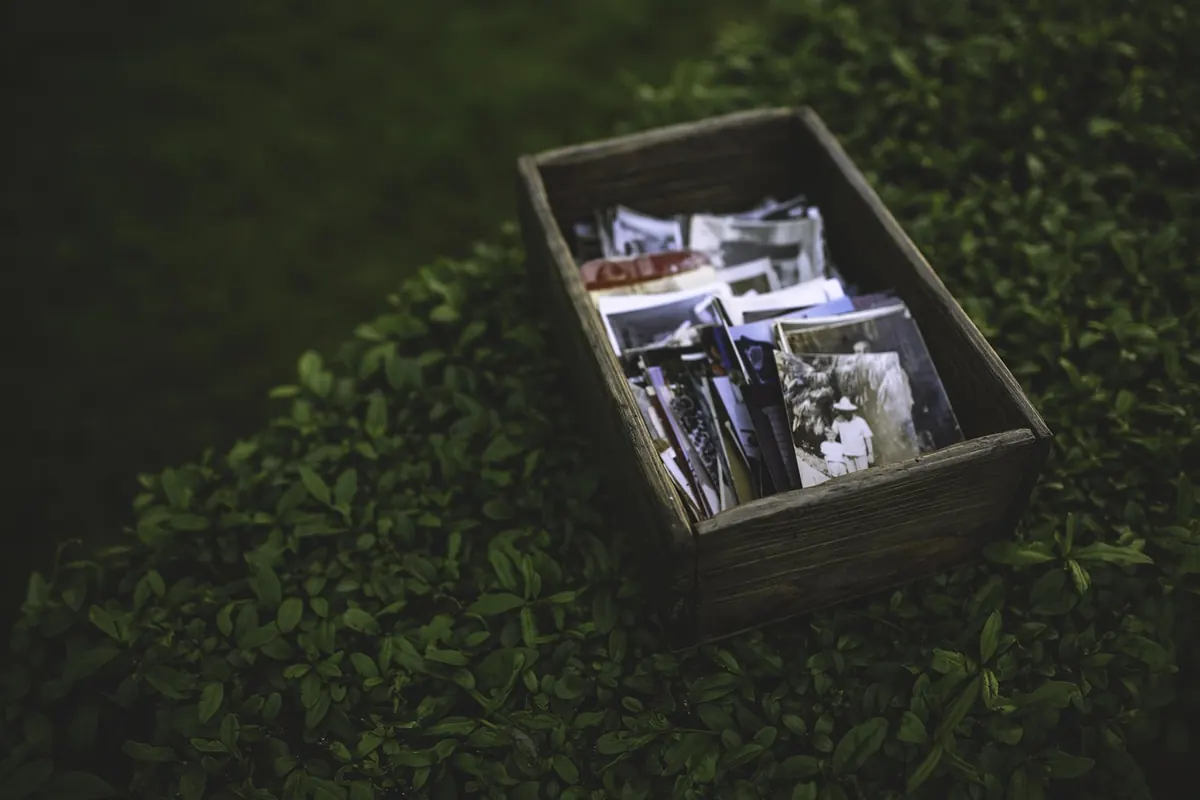
Emptying a whole shoebox onto the table is a trap: you handle each photo twice and lose an hour to nostalgia. Work in batches of 20 to 30 instead. Spread them out, make one pass, move on. For digital photos, sort by year or event and delete as you go — the blurry shots, the near-identical burst of the same smile, the screenshots you'll never open again. If you have prints you genuinely can't part with, scan the best and offer the rest to relatives who'll want them.
Four questions that do most of the work
- Can I name the people and the occasion? If not, it's scenery.
- Does this show a moment, or just a place?
- Do I already have a better version of this same shot?
- If this turned up in a box in ten years, would I be glad?
Be generous with photos of people, stingy with landscapes, buildings and sunsets. Keep the ones with faces and stories attached.
Gifts, Guilt, and the Person Behind Them
A gift has already done its job the moment it was given: it carried someone's affection from them to you. Keeping it in a cupboard for twenty years doesn't honour that. It just creates a small pang of guilt every time you open the door.
So ask two practical questions. Do I use it or display it? Does looking at it make me feel something good? If the answer to both is no, it can go — donated, passed on to someone who'd love it, or photographed and rehomed. If the giver is still in your life and would genuinely be hurt to find it missing, that's worth weighing. You're allowed to keep one thing for someone else's feelings. You're not required to keep twenty.
Heirlooms and Childhood Keepsakes
Keep the story, not always the object
An heirloom's value usually sits in the story attached to it, and stories can be written down. If you inherit a twelve-piece china set you'll never use, keeping one cup and saucer — or photographing the set and writing a short note about who owned it — preserves the meaning in a form you can live with. If you're the sort of person who'd actually use the china, keep the set and use it on ordinary Tuesdays.
If siblings share an estate, agree on a process before anyone starts claiming things. For anything with real monetary or legal weight, get proper professional advice rather than settling it at the kitchen table.
Your keepsakes and your kids'
Your own childhood boxes are usually smaller than they feel. Keep the items that carry a specific memory — the report card with the terrible handwriting, one soft toy, a single trophy — and let duplicates and generic schoolwork go.
Children's artwork is its own flood. A folder per child per year, holding maybe ten pieces, is plenty; photograph the rest before recycling. If your children are grown, ask before keeping their things on their behalf. And if they tell you they don't want their old school projects, believe them.
When You Get Stuck Mid-Sort
Stalling is normal, and it usually means one of two things: you're tired, or you've hit an item carrying more grief than you expected. For tiredness, stop and come back tomorrow. For grief, give it room. Sorting a parent's belongings six weeks after a funeral is a different task from doing it three years later, and there's no prize for speed.
A few things help when an object stops you cold:
- Make a "decide later" box and date it. Revisit in six months; many items will have loosened their grip by then.
- Photograph it and write two sentences about why it matters. Often the photo plus the note is enough.
- Ask a friend to sit with you. Not to decide for you — just to keep you moving.
- Offer it to someone who'll use it. Knowing where it's going makes letting go easier.
If you're sorting through a loss and the process feels overwhelming rather than merely sad, talking to a counsellor or a grief support group is a reasonable step, not an overreaction.
Your First Small Step
Pick one category — the easiest one — and one container. Set a timer for 30 minutes. Sort, decide, and stop when it rings. Put the keepers somewhere you'll actually see them, and put the donation bag straight into the car so it leaves the house this week.
Then do it again next week. Sentimental decluttering rarely finishes in a weekend, and it doesn't need to. Done slowly, in small doses, with permission to keep what you truly love, it stops feeling like a chore and becomes something closer to remembering — with a little more room around it.
Photo: kaboompics / Pixabay